

Date:
2023
Location:
Hospitalet de Llobregat, Spain
Client:
Adtel
Final users:
Hospitalet de Llobregat
Deployment:
40 units
Parameters:
NO2, NO, NOx, CO, O3, SO2, H2S ppb
PM1, PM2.5, PM10 ugr/m2
Noise, temperature, humidity, pressure
PM1, PM2.5, PM10 ugr/m2
Noise, temperature, humidity, pressure
Technologies used:
Challenge
L’Hospitalet de Llobregat faced increasing air qualityissues exacerbated by urban density, heavy traffic,losgitics and industrial activity. Despite having several regulatory Air QualityMonitoring Stations (AQMS), the city lacked granular,localized environmental data essential forpinpointing pollution hotspots and implementingprecise climate adaptation strategies.Moreover, a new regulation obliged the city todesign and deploy a Low Emission Zone (LEZ).
Solution
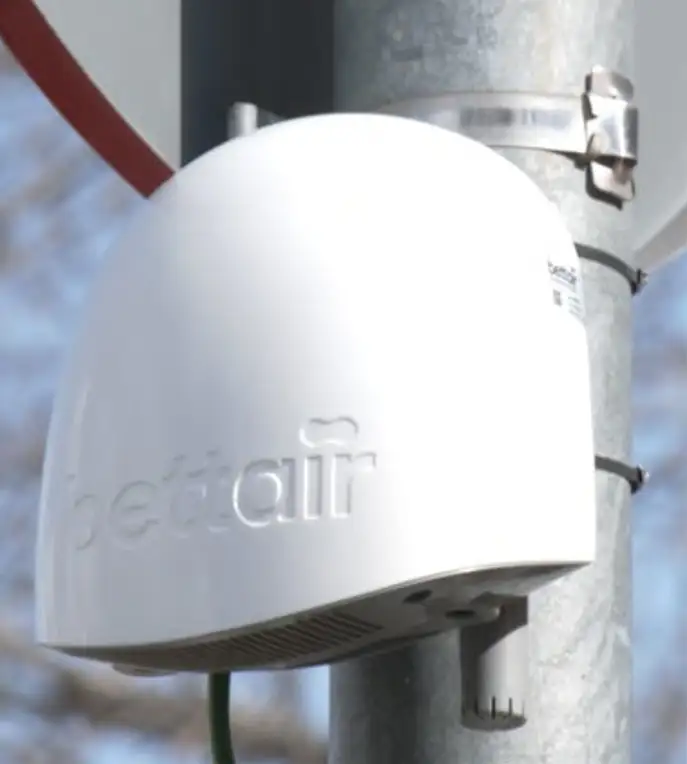
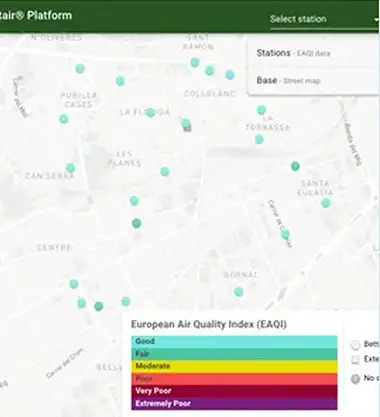
Adtel, a Spanish company specializing in telecommunications, was awarded the tender for supplying and installing technological elements necessary for the full deployment of the Low Emission Zone (LEZ) in L’Hospitalet. To address the need for accurate and real time Air Quality data, Adtel partnered with Bettair to deploy more than 40 IoT-based sensors across the city.
These sensors provide real-time, high-resolution data compliant with CEN TS 17660, on pollutants such as nitrogen dioxide (NO₂), nitric oxide (NO), nitrogen oxides (NOₓ), carbon monoxide (CO), ozone (O₃), sulfur dioxide (SO₂), and hydrogen sulfide (H₂S) in parts per billion (ppb). They also monitor particulate matter (PM₁, PM₂.₅, PM₁₀ in μg/m³), as well as environmental parameters including noise levels, temperature, humidity, and atmospheric pressure.
The project includes the integration of data into the city’s intelligent traffic system through the Bettair API, complementing another 20+ Bettair sensors in public buildings, climate shelters and spaces like schools, ensuring comprehensive environmental monitoring.
Outcomes
This comprehensive monitoring approach enabled the city to implement informed policies promoting sustainability and urban resilience.
Bettair’s sensors helped identify and mitigate air quality risks, enabling the city to optimize urban mobility plans and improve public health outcomes. And the high-precision data facilitated the enforcement of Low Emission Zones (LEZ), reducing vehicular emissions.
Additionally, the city enhanced its network of climate shelters, contributing to increased urban resilience. L’Hospitalet has since become a benchmark for integrating smart air quality technologies into municipal governance and urban planning.

Categories:
Sectors:
Share it